
THE education site for computer science and ICT
3. Assigning variables
The simplest type of variable is a single value, for example:
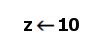
The line of pseudocode above is setting the value of the variable called 'z' to '10'. This value is then stored in memory (RAM).
One of the handy things about giving a name to a variable is that you do not need to care where in memory 'z' is located - the operating system is taking care of all that.
If you want to use 'z' again bit later in the code, then you use its name. For example on line 12:
Line 10: z10 // assign 10 to z Line 11: b
Variables can get more complex than this. For example a variable might be a list of values (called an array):
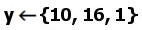
This is discussed further in a section covering arrays.